Monday, February 29, 2016

The Singer Songwriter’s Guide to Recording Equipment

Soundbase Megastore is located in the upbeat Northern Quarter of Manchester city centre and boasts a large open plan showroom set up to demo all the latest Studio, Lighting, DJ and PA Equipment.

Simon, the author of recording articles at Soundbase Megastore has over 15 years experience working in commercial recording studios as an engineer / producer. His experience covers working with Garage bands, doing lo-fi recordings for DIY release to recording and producing established artists for international label releases. This in depth experience provides Simon with the knowledge of recording equipment and techniques and places him in the perfect position to offer advice on music production equipment in respect to what the artist is looking to achieve within their budget.

The Singer Songwriters Guide to Recording Equipment
image-3239


Home Recording Studio’s are becoming increasingly more popular. In this article Soundbase Megastore will explore the basic essentials for all studios, plus further essentials and desirable attributes for a singer songwriter’s recording studio, in relation to what instrument you play and the sound you would like to produce.

So Where Do You Start?

The most popular kind of multi-track for sound recording is currently a DAW (Digital Audio Workstation). The DAW software you choose should reflect what you want to do in your studio and how advanced your music production skills are.

After you’ve decided on your computer and DAW software, the next step is to pick the best audio interface. A high percentage of signal path fidelity is in converting your signal from analogue to digital and vice versa. So think carefully about how much you can afford to spend and how many simultaneous inputs and outputs you’re going to need. Also consider whether you require External Word Clock, S/Pdif, Optical and MIDI connections and if so, how many ports are you going to be using.

One final thing when buying an audio interface is to read a little info on forums to see if any users have encountered problems while using it with specific software. Especially with cheaper PCI soundcards you might find that it just isn’t compatible with the mother board and chip set in your computer.

You also need to think about how to monitor your song during recording, mixing and mastering. What’s best for you, passive or active monitors? What are the acoustics of the room you’re going to be playing and monitoring in like? Will your house mates be trying to sleep in the room upstairs while you’re slaving away on your next “big song”?

So you’ve got the basic idea of what gear you need to get started. Next we’ll look at what essential and variable peripherals are best for a studio for singer songwriters and the different types of equipment available.

Basic singer songwriter Recording Set-up

For a singer songwriter looking to build a studio for doing demo recordings or DIY releases of their new songs, DAW software such as Pro Tools, Cubase or Logic would be ideal. While this software is advanced it also means you won’t be limited in anyway by its capabilities. These programmes can also be as advanced as a modern recording studio or as simplistic as using a cassette deck 4 track. If you’re limited for budget and are only looking to record, with basic mixing you might be more suited towards Garage Band or Cakewalk. However, the more you get into recording your music, the more you’ll want to do with the software and before long you’ll find yourself wanting to upgrade to a more advanced software package. So its always best to buy a more advanced music programme from the outset.

Audio Interface


Tascam US 2X2When it comes to buying an audio interface suited for this kind recording set-up a simple 2 in, 2 out USB, 24 bit 96kHz interface with XLR inputs is perfect. Soundbase would recommend buying one with MIDI I/O as there is not much difference in price for ones with MIDI and ones without. Plus its better to have this option, rather than not, especially for you piano players.

When you increase your budget for an audio interface you essentially get better Mic pre amps and ADA converters. This is what gives you clarity and fidelity for your recordings, however you may find yourself paying for features on the interface that you will never use. For a studio of this capacity there are a number of audio interfaces on the market from as little as £80.

Here are a few recommended audio interfaces suited to budget recording studios:

Next Up, You’re Going to Need a Microphone

The SM58 is a close proximity vocal microphone and has been the industry standard for many years. Although you may want to look into some other options like the SM7. If you only want to use the mic for recording in your home studio then a condenser microphone would be better suited than a dynamic microphone. Condensers are powered (48v) microphones and often have a larger diaphragm than a dynamic microphone. This means you get a warmer sound with more clarity as well as a the signal to noise ratio being less noisey. For a dynamic microphone, Soundbase reccomend looking at spending £70 plus, and for a condenser £120 plus. Anything less than that and you might as well just flush your cash down the toilet, but do look around at what’s available second hand in the B Stock at Soundbase Megastore.

For a “budget” vocal condenser microphone Soundbase recommend sontronics microphones, they sound amazing for the price.

For the acoustic guitar, you might want to look into buying a second condenser microphone so you can record your guitar in the same performance as your vocals.

While you might be happy with the sound of your acoustic guitar pick up plugged straight into the interface, a microphone gives you a wider scope for recording in terms of proximity and axis to capture the sound you desire. Another benefit to having a condenser microphone is you could simply place the microphone in the room and capture a natural room recording. There are no rules as to whether you should use a dynamic or condenser microphone to record your guitar. Some producers like to record acoustic guitars at close proximity with an SM57, compressing the hell out of it, but more on that another time.

Here are a few recommended microphones for recording both vocals and guitars, suited to a range of budgets:

Piano-based Songwriters

There’s a few different options to consider when it comes to how to record your piano parts. The most obvious is simply to place a good condenser microphone on an acoustic piano and hit record. For a novice at recording piano, however, this can be a very complex instrument to capture well, plus if your piano is out of tune then it will also be out of tune on the recording. The second option would be to buy a full size MIDI keyboard with weighted keys and a sustain pedal and connect this direct to your interface via MIDI or direct to your computer via USB. The signal from the MIDI keyboard will be recorded to your DAW and you only need a Virtual Piano instrument like the XLN Audio addictive Keys to playback a piano sound. The same MIDI controller keyboard can also be used to add string parts to your song.

All you would need to do this is a virtual string instrument, and so on for any instrument you can think of. A further option for those of you using a Clavinova or electric piano is to simply connect the line output of your Clavinova to your audio interface. Many Clavinovas also have a MIDI out on them that means they can also be used in the same way as a MIDI controller keyboard.

For a full size budget MIDI Keyboard Soundbase recommend:

M Audio Keystation 88
image-3240

Monitoring Your Recording

So you’re all set to record your songs, but you’re also going to need a pair of studio monitors or headphones to listen back to your recordings. While you could simply plug direct into your Hi-Fi from your audio interface it would be more suitable to listen back through flat response, uncoloured studio monitors so you can hear a true representation of what you have just recorded, in terms of both performance and signal clarity.

For a studio of this calibre Soundbase Megastore would recommend active studio monitors as you can simply plug them straight into the output of your audio interface.

Here are a few pairs of active studio monitors for under £250:

Are studio monitors the best option for your studio or would you be better suited for monitoring through studio headphones?


The first major benefit of using headphones is that if you wish to record backing vocals and guitar overdubs, for example, then monitoring the recording through headphones means that your song won’t spill from the monitors into the microphone while you’re recording. The second benefit of using headphones for monitoring and mixing your song is that you don’t have to be concerned with any noise restrictions. You can work on your songs anytime of day, in any place with the peace of mind that you’re not offending anyone.

Recommended Studio Monitor Headphones for under £120

AKG K612Last up you’re going to need to put a little aside in your budget for cables etc. For a recording set-up of this standard Soundbase suggest you put aside £40 – £150 of your studio budget for cables, pop shields and microphones stands etc.

The suggested budget for a recording studio set up for a singer songwriter is between £400 – £1900. If you are looking to buy a complete set-up from Soundbase then don’t hesitate to contact us for a package price, or simply view the following discount packages for everything you need to start recording your songs.

  • Basic Vocal Recording Studio Equipment Package – Click Here – £489.00 inc VAT
  • Intermediate Songwriter (guitar) Studio Equipment Package – Click Here – £805.00 inc VAT
  • Intermediate Songwriter Studio Equipment (keys) Package – Click Here – £1025.00 inc VAT
  • Advanced Studio Equipment Package for Vocals and Keys – Click Here – £1215.00 inc VAT
  • Advanced Studio Equipment Package for Vocals and Acoustic Guitar – Click Here – £1200 inc VAT

Read Full Article Here: http://www.helpforbands.co.uk/the-singer-songwriters-guide-to-recording-equipment/

Sunday, February 28, 2016

Tickets Online

For most people, trying to get a good rate on airfare is a necessity. Most people spend the bulk of…

Tickets Online is republished from http://shadowkeep.co.uk


More Information: http://shadowkeepuk.tumblr.com/

Friday, February 26, 2016

Concert Tickets

If you enjoy attending big events in sports, music, theater, or other major events, you probably realize how difficult securing…

Concert Tickets was originally published to Shadow Keep


More Information: http://shadowkeepuk.tumblr.com/

Wednesday, February 24, 2016

Music Tickets

Have you ever been the last person to find out about a concert in your area? Country music musicians typically…

Music Tickets is courtesy of Shadow Keep Blog


More Information: http://shadowkeepuk.tumblr.com/

Tuesday, February 23, 2016

Your Workspace Is Important

In an interview with DART: Design Art Daily, Jeffrey Decoster makes a great observation about an artist’s workspace:

The idea is for it be inviting when I’m not working, and for it not to fight me when I’m in a groove. I used to think these were secondary matters but it’s so enjoyable to work in a space that has an auspicious feeling about it.

Where is a musician’s workspace?  The stage?  The band practice room?

The most important workspace for me is my personal practice space at home.

That’s because this is where the real work gets done.  The daily grind, payin’ my dues, woodshedding.  And I don’t want this workspace to fight me when I’m in a groove.  I want it to feel auspicious.  I want it to help me get more practice in.

So what’s your workspace look like?  Does it help you?  Or fight you?

Get some inspiration.

The post Your Workspace Is Important appeared first on The Guitar Journal.

Monday, February 22, 2016

Cheap Guitars

The Gibson Les Paul guitar was conceived at the very beginning of electric guitar history and has held its place…

Cheap Guitars was originally published on Shadow Keep Band Blog


More Information: http://shadowkeepuk.tumblr.com/

How to Move Tracks From Music Memos App to GarageBand

The new Music Memos app from Apple is a welcome upgrade for musicians who have been using the Voice Memos app to record song ideas.  Music Memos allows you to record in uncompressed audio, add drums, add bass lines, make notes, and export to GarageBand.

Why Would You Export to GarageBand?

The quality of your Voice Memos recording probably won’t be good enough to use in GarageBand for a final track (unless you’re using a dedicated input device, like the Apogee JAM).

However, the track may be worth importing as a reference track.  A reference track can be used to base new track recordings on.  You play the reference track, and record new instruments or vocals along with it.  Once you’ve replaced, doubled, or added new tracks to the reference track, you can delete it.  Then you’re left with a shiny new recording.

So how do you move the tracks – or ‘Ideas’ as the app calls them – to GarageBand?

3 Ways to Import From Music Memos into GarageBand

For all methods, start by opening your Music Memos app.  Swipe up or click the folder tray icon at the top of the app to access your list of Ideas.

Import From Music Memos to GarageBand 1

Then, click on the Idea (try not to click right on the title, which will enable editing on the title) to reveal the Details view.

Music Memos to GarageBand 2

Method 1: Share to GarageBand on iOS

The simplest export is to work with your Idea right in the GarageBand app on your iPhone or iPad.  This is a great way to experiment with some loops, do advanced trimming, or use some of the Smart instruments.

Music Memos to GarageBand 3

a) Click the Share button in the top right, and share with GarageBand.

b) GarageBand App will open.

c) Go to MySongs and your Idea will be available in the browser.

Method 2: Share to iTunes (which can be accessed from GarageBand)

Music Memos to GarageBand 4

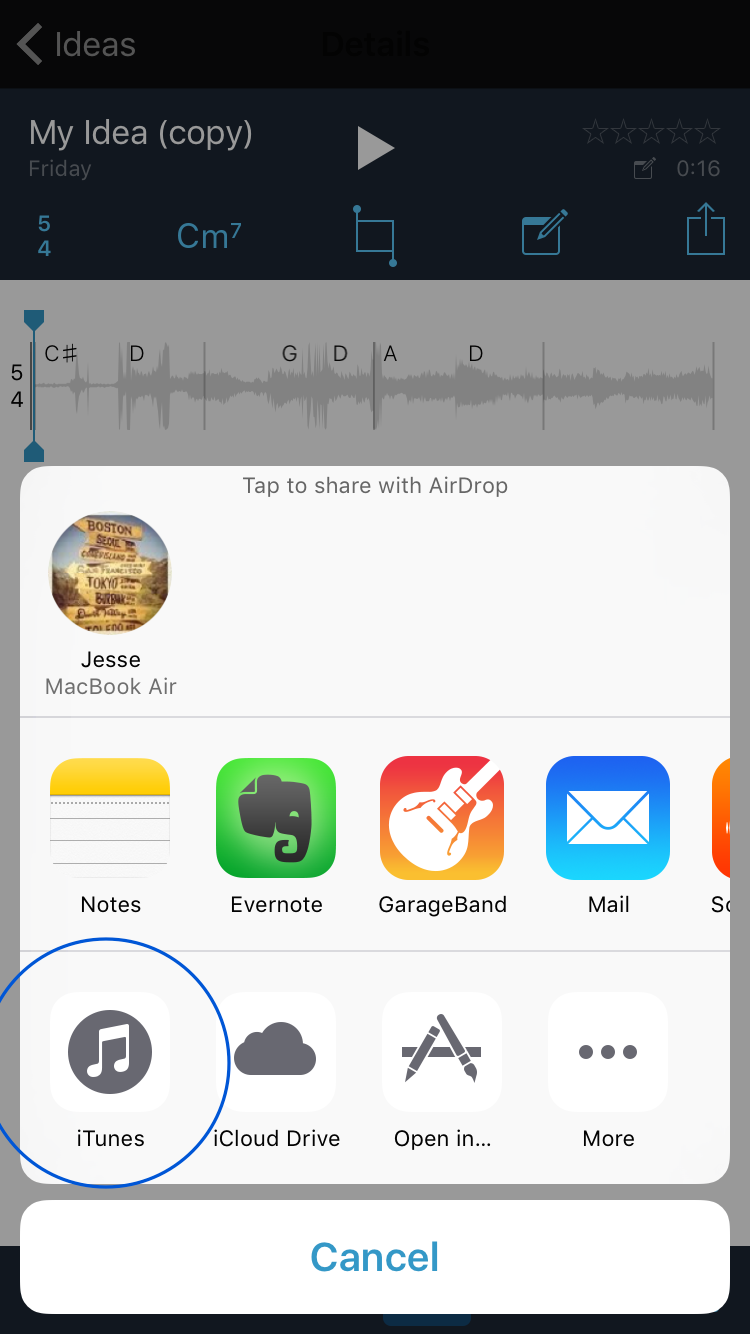
a) Click the Share button in the top right, and share with iTunes.

b) Select the “iTunes” option.

c) Connect your iPhone or iPad to iTunes on your laptop or desktop.

d) The track will be now be available through iTunes files sharing (for help on this, see this article).

Method 3: Share to iCloud

Music Memos to GarageBand 5

a) Click the Share button in the top right, and share with iCloud.

b) The track will now (or shortly) be available anywhere you can access your iCloud drive.

The post How to Move Tracks From Music Memos App to GarageBand appeared first on The Guitar Journal.

Saturday, February 20, 2016

Guitar Scales

To start off this guitar scales practice tip, let me ask you a quick question. When was the last time…

Guitar Scales is available on http://www.shadowkeep.co.uk/


More Information: http://shadowkeepuk.tumblr.com/

The Benefits of Vinyl

I’m not a big vinyl guy. I have a few records, I listen to them once in a while. Most of the time I stream music online.

But tonight I walked into a local used record store and bought two gems:

Graceland by Paul Simon, and

Two for the Road, Herb Ellis and Joe Pass.

I took a listen and thoroughly enjoyed both albums.  I think I enjoyed them so much because listening to vinyl provides me (at least) two benefits:

Attention

When I put a record on, I pay attention to it. It’s not just background noise or mood music. And when I give good music my attention, I’m rewarded. That’s when I feel the kind of joy I had when I first got into music.  I’m not distracted and I’m not multitasking. I’m actually listening.

Intention

When I put a record on, I’m intentional about what I choose. Much of my streaming music behavior has devolved into algorithmic suggestions or topical playlists. It’s a very different thing to sit and think, What do I want to listen to? What artist do I want to engage with? It makes me a musical explorer instead of a couch potato.

The post The Benefits of Vinyl appeared first on The Guitar Journal.

Friday, February 19, 2016

1 Minute Video Review – Music Memos App

Apple released the Music Memos app a few weeks ago.  The intent is to provide an upgrade to the existing Voice Memos app, with a focus on recording musical ideas.

I think Apple is spot on with this update.  Recording musical ideas is pretty much the only thing I used Voice Memos for.  So it’s nice to get a specialized version with key features like drum accompaniment, auto record, and syncing to GarageBand.

Download Music Memos here.

See it in action with 1 Minute Video Review:


The post 1 Minute Video Review – Music Memos App appeared first on The Guitar Journal.

Thursday, February 18, 2016

Guitar Techniques

Practicing the guitar is no different than doing anything else to improve other aspects of you life. For example, if…

Guitar Techniques See more on: www.shadowkeep.co.uk


More Information: http://shadowkeepuk.tumblr.com/

Every Musician Is A Marketer

Mihaly Csikszentmihalyi has written several insightful and oft referenced books on creativity and the creative process, particularly Flow and Creativity.

In Creativity, he discusses the Systems Model of Creativity. This system describes how a piece of creative work becomes significant in the general culture. There are essentially three pieces to this model:

1. The domain is the area of creative work (e.g. painting, music, literature).

2. The field is the collection of gatekeepers for that domain (e.g. art curators, music critics, editors).

3.  The individual learns the rules of the domain, creates new work, and submits it to the field for acceptance.

Recently, things have gotten interesting.

The gatekeepers for any given creative domain have become less clear in recent years.  The traditional gatekeepers, like music labels, hold less power today in dictating culturally accepted works of creativity.  Viral videos, Kickstarter, Yelp.  Who needs a high brow food critic’s review anymore?

This leads to (at least) two things

1. The traditional gatekeepers take less chances.  When a music label could rely on their clout to generate sales, it was worth betting on middle-level or upcoming talent.  The risk was low because they could at least count on recouping their costs.

But with less sales clout, the risks of losing money go up, which means less willingness to promote those middle level artists.  All the money goes to ‘sure bets’, the top performers with the proven track record.  This is why so many movies right now are sequels or reboots.  These are the safe bets of beleagured gatekeepers.

2.  Every musician is a marketer.  Maybe this was always true. Every creative person is responsible for creating their own audience.  It’s unlikely someone else will do it for you.  On the bright side, there’s never been more tools for doing this.  On the darker side, there’s never been more voices competing.

The more serious concern is that the relentless need to self-promote saps energy from the more important work of creating something meaningful.

The practical solution?

Find your audience.  Find the group of people who care enough about your work to support you.  It doesn’t have to be huge.  A 10o rabid fans outweigh a 10,000 disinterested acquaintances. Connecting with them becomes an investment that pays dividends, rather than a money pit that leaves you broke. For a large amount of creative people, this is the way forward.

For the real scoop on this, check out Seth Godin’s Tribes.


The post Every Musician Is A Marketer appeared first on The Guitar Journal.

Wednesday, February 17, 2016

Guitar For Sale

You want to learn how to play guitar. The best place to start is with the basics. I will be…

The blog post Guitar For Sale See more on: Shadow Keep Blog


More Information: http://shadowkeepuk.tumblr.com/

Tuesday, February 16, 2016

Over 500 Alternate Tunings for Acoustic Guitar

This is, by far, one of the coolest online resources I’ve seen for acoustic guitar: www.gtdb.com.  Don’t even bother to read this post, just go check it out.

Guitar Tuning Database

According to their homepage, gtdb.com has been going since 2011.  The site keeps a huge list of alternate guitar tunings, racking up 507 different tunings.  Many of the tunings are user-submitted so, in addition to Open D, you also get some random ones like  Standard <2 Inversed (whatever that is).

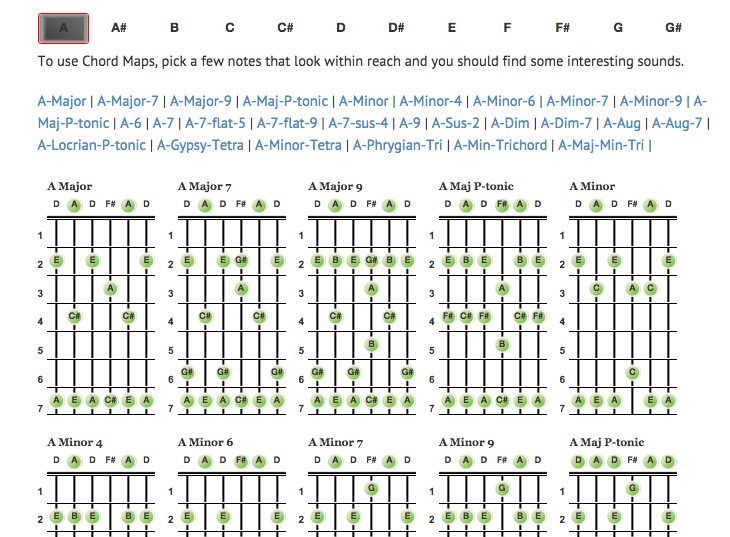
Alternate Tunings

A quick explanation here:  “Alternate” tunings refer to all guitar tunings outside of the normal “Standard” tuning (i.e. EADGBE).  Often people speak of “Open” tunings.  Open tunings refer to any tunings that create a chord when all the open strings are strummed.  Thus, open tunings are a smaller subset of alternate tunings.


Alternate Tunings


Chord Lists

Learning how to finger chords in a tuning can be painstaking work.  If you click the “chords” link next to any tuning, you get a full list of chord positions.

Alternate Tunings - Chords


Scales

Scales are also tricky in new keys. Click the “scales” button, though, and you get the full fingerboard layout for all modes in your new tuning.

Note: One drawback is that the familiar CAGED system doesn’t work.  You can create some of your own “boxed” positions for your new scales, but it’ll take a little homework.

Alternate Tunings: Scales


Song Tabs

This part of the site is good, but hit-or-miss.  There’s a lot of tabs entered and tagged to the appropriate tunings.  Some look promising (like the Michael Hedges tune below).  Others are just chords-over-words style.  If I was going to dig into a tab here, I would do some homework first and cross-check it against some of the other tab sites.

ALternate Tunings: Tabs

The post Over 500 Alternate Tunings for Acoustic Guitar appeared first on The Guitar Journal.

Monday, February 15, 2016

Florentine vs Venetian Cutaway: What’s the Difference?

TL;DR:  A Venetian cutaway is rounded, a Florentine cutaway is sharp.  As a mneumonic, you can remember that the Florentine is like floss, which feels sharp on your gums.

A Tale of Two Cutaways

The cutaway of an acoustic guitar gives access to the upper frets.  The luthier provides this access by removing part of the body of the guitar under the upper neck.  The luthier may choose to shape the cut-out a few different ways.  The two main variations are Venetian and Florentine.

Venetian cutaways are smooth and rounded, and much more common in contemporary acoustics.

Venetian

Venetian Cutaway

Florentine cutaways are sharp and are terminated in a point of some sort.  These are less common.

Florentine

Florentine Cutaway

The terms appear to have nothing to do with Italian geography.  Instead, guitar makers brought them into usage in the first half of the 20th century.

Some folks claim to hear a tonal difference in guitars with differing styles of cutaways.  Most folks, though, agree that the cutaway style does not affect the tone.  It is primarily an aesthetic device.

There’s lots of forums out there debating the merits – aesthetic or otherwise – of these cutaways.  You can check out a few here, here, and here.

As for me?

Personally, I’m not the most delicate player.  So I prefer less sharp edges, simply so I have less opportunity to bang it on something.  Not very sophisticated, I know.  But practical.


The post Florentine vs Venetian Cutaway: What’s the Difference? appeared first on The Guitar Journal.

Do you Have What it Takes to Land a Music Sync Deal?

Do you Have What it Takes to Land a Music Sync Deal?


Pop quiz — High School style.

Ben Lindvall knows what it takes to land a sync deals. He regularly places his home produced songs in Fox Feature Films, Television Networks and commercials like Subway Sandwiches. He helped us put together four essential questions to help you get started.

1. Do you love making music; I mean–really–love, making music?

Ben’s first freelance gig was for Car & Driver online. The pay was minimal and the demands were kind of crazy, but he loved it because all he wanted to do was write and record original music.

2.  Do you believe that things will work out… Somehow?

When Ben first moved to New York all he had was a two-month studio engineering certificate from the Recording Workshop in Chillicothe, Ohio, yet somehow, he thought it would work out, and it did…. eventually.

3. How long will you keep trying until you succeed?

Successful entrepreneurs aren’t smarter or better with people – they  just don’t give up. Neither did Ben. When the studios refused to hire him, he started interning. When he tired of pushing paper, he started freelancing. He didn’t have the skills when he started out, but he learned them.

4. Can you truly listen? Can you ask good questions? Can you work within a deadline?

Ben’s first clients knew nothing about music production, but they had ears, and they weren’t afraid to tell him what they thought.

“That’s not at all what we were looking for.

Can you speed it up?

Can you slow it down?

Can you get me something with lyrics and a melody in two hours?”

It was a steep learning curve, but it taught him to ask the right questions – up front – to listen and respect the answers, and to deliver on time – all the time.

Music sync deal

Want to give your tunes an extra boost before pitching them to a client?

LANDR can help.

Ben uses it for his commercial projects because:

  1. It makes tracks more audible, so that you can trust that what you’re making is going to translate on a pair of iphone headphones.
  2. He finds it easier to work with a dry master bus and give it to LANDR because it gets his tracks loud and clear without having to worry about extra parameters as with a lot of mastering plug-ins.
  3. LANDR is like a second set of ears, like a collaboration without needing someone else to re-arrange or re-mix your track. The results are really exciting.

Read Full Article Here: http://www.helpforbands.co.uk/do-you-have-what-it-takes-to-land-a-music-sync-deal/

Songs To Play On Guitar

It is a universally known fact that when people don’t enjoy doing an activity they will do everything in their…

The post Songs To Play On Guitar is available on Shadow Keep Blog


More Information: http://shadowkeepuk.tumblr.com/

Saturday, February 13, 2016

Seth Godin Wants to Know if Your Music Is Any Good?

I highly recommend a recent podcast by Tim Ferriss, where he interviews Seth Godin. It’s long, but worth it. I like it when my brain feels alive, and Seth makes my brain feel alive.

For those who aren’t familiar, Seth Godin is widely known (and respected) marketer, thinker, and author of books like Tribes and The Dip.

In the podcast, Tim and Seth cover a number of things:

  • Coffee
  • Vodka
  • Money
  • Books
  • Social Media
  • Business Ideas
  • Meditation

The two that stick with me are:

Money.  A Wall Street Journal article mentioned that after $75k/year, money stops making you that much more happy.  It just gets you more stuff.

Seth adds to this by saying that after a certain amount of dollars, we use money to tell a story.  Stories like: “I’m worth something now.”  “I have achieved.”  “I’m better than x.”

Or, to put it in musician terms:  “If I make x dollars… I’m a professional.” or “…I’ll be happy”.  or “…I’ll finally write the music I want to write (instead of the schlock I’m doing now).”

These stories have two main problems.  They’re false, and they’re distracting.

It’s possible that you should be saying ‘no’ to certain money-making activities, so that you can say ‘yes’ to something more important.

Which brings us to:

Value.  The major takeaway for me is when Seth gets into the area of value.  He asks, How are you creating value for the world?  How are you improving the world around you?  Are you making people’s lives better?

Answering these questions makes for a better personal story.

This story is about being generous, and creative, and bold.  It’s about saying yes to the projects you fear.  And about saying no to the resistance in your head.  It’s about prioritizing the meaningful stuff.

In the end, it’s about doing things you’re proud of.

The question I’m asking myself today is:  How can I add value to the world around me?


The post Seth Godin Wants to Know if Your Music Is Any Good? appeared first on The Guitar Journal.

Friday, February 12, 2016

Kid Rock Songs

The song “Sweet Home Alabama” by Southern rock legends Lynyrd Skynyrd (pronounced Leh-Nerd Skin-Nerd) is one of the most popular…

The post Kid Rock Songs See more on: http://www.shadowkeep.co.uk/


More Information: http://shadowkeepuk.tumblr.com/

Thursday, February 11, 2016

Basic Guitar Chords

Understanding Guitar Chords, the Key Element to Mastering the Guitar Don’t get discouraged if you’re trying to learn the guitar.…

The article Basic Guitar Chords was originally published on Shadow Keep Band Blog


More Information: http://shadowkeepuk.tumblr.com/

Guitar Lesson

A core aspect of guitar practice is goal setting. To put it bluntly – you must set goals! Let me…

Guitar Lesson See more on: http://www.shadowkeep.co.uk


More Information: http://shadowkeepuk.tumblr.com/

Guitar Lessons

Many people want to learn to play the guitar but never get to actually commit to doing it. It’s a…

The following article Guitar Lessons Find more on: Shadow Keep Band


More Information: http://shadowkeepuk.tumblr.com/

Guitar Chords

One of the challenges for the novice guitarist is learning the basic chords. You will not only need to know…

The post Guitar Chords Find more on: Shadow Keep Band


More Information: http://shadowkeepuk.tumblr.com/

Wednesday, February 10, 2016

Live Band

Fall Out Boy tickets may be relatively new to the overall music performance market, but this band has already garnered…

Live Band was first published on www.shadowkeep.co.uk


More Information: http://shadowkeepuk.tumblr.com/

Tuesday, February 9, 2016

Second Hand Guitars

Before people make changes to their guitars, whether it might be a hardware change, or a finish change, they try…

The blog post Second Hand Guitars Find more on: Shadow Keep Blog


More Information: http://shadowkeepuk.tumblr.com/

Guitar Acoustic

Here is a free acoustic guitar lesson to help you improve your guitar playing skills quickly. This guitar learning techique…

Guitar Acoustic is republished from Shadow Keep Band


More Information: http://shadowkeepuk.tumblr.com/

Saturday, February 6, 2016

Guitars For Sale

If you are a guitarist, you will occasionally need to replace your gear. If this is not the case, perhaps…

The post Guitars For Sale See more on: http://www.shadowkeep.co.uk


More Information: http://shadowkeepuk.tumblr.com/

Friday, February 5, 2016

The 10 Best Easy Fingerpicking Songs for Beginners

Learning fingerpicking guitar (or “fingerstyle guitar” as it’s also called) can be overwhelming.  You see YouTube’s of people like Andy McKee or Tommy Emmanuel and you think, “not me”.  But playing this kind of music is like the journey of a thousand miles – you have to start with a single step.

So where to start?

Choosing Easy Fingerpicking Songs

If you search around for easy fingerpicking songs or tab, it’s obvious that the 1960’s and 70’s were a golden age for this genre with folks like:  Simon and Garfunkel, Bob Dylan, Led Zeppelin, and, of course, the Beatles.

Based on that era, and more modern fare, I’ve compiled a list of 10 great fingerpicking songs that:

  • Are perfect for beginners of all background.
  • Are easy and well known.
  • Cover different genres.
  • Represent the “most often recommended” songs for those genres.

A special thanks to reddit, Guitardomination.net, and posts here and here, for providing some great lists as inspiration.  If you want to see some more ideas, make sure to check out their posts.

NOTE: If you’re just getting started on fingerpicking, I highly recommend Don Ross’s “Fingerstyle” course at JamPlay.  He does an excellent job breaking down basic fingerpicking technique – including Travis picking, hand placement, etc. – to quickly get you up and running.  (Head ups, if you click through that link and end up signing for his course, a few bucks will come back to support this site.  Thanks in advance!)

The List

1. Blackbird (The Beatles)

Key of G, melodic, beautiful.  Destined to be your first fingerpicking song.

“Blackbird” tab
“Blackbird” MP3

2. Dust In The Wind (Kansas)

This song does double duty.  Use the same picking and chord patterns to play “Landslide”, by Fleetwood Mac.

“Dust in the Wind” tab
“Dust in the Wind” MP3

3. Ain’t No Sunshine (Bill Withers)

“I know, I know, I know, I know, I know…”

“Ain’t No Sunshine” tab
“Ain’t No Sunshine” MP3

4. Nothing Else Matters (Metallica)

The rythym guitar parts fall into the “beginner” category, the lead acoustic guitar…well, not so much.

“Nothing Else Matters” tab
“Nothing Else Matters” MP3

5. Shape of My Heart (Sting)

A bit obscure, but a really beautiful song well within the reach of someone just getting into the world of fingerstyle guitar.

“Shape of My Heart” tab
“Shape of My Heart” MP3

6. Don’t Think Twice It’s Alright (Bob Dylan)

The nice thing is that you’ll be able to play this as good as Bob in about 20 minutes. (But he did it while playing harmonica and spouting poetry like a Norse god.)

“Don’t Think Twice It’s Alright” tab
“Don’t Think Twice It’s Alright” mp3

7. Good Riddance (Green Day)

Because rock.

“Good Riddance” tab
“Good Riddance” MP3

8. Babe I’m Gonna Leave You (Led Zeppelin)

Haunting, classic.

“Babe, I’m Gonna Leave You” tab
“Babe, I’m Gonna Leave You” MP3

9. Hallelujah (Jeff Buckley)

No, this song was not written for Shrek.  And Jeff Buckley’s version is best.  Look it up.

“Hallelujah” tab
“Hallelujah” MP3

10.  The Boxer (Simon and Garfunkel)

Everything Paul Simon does is beautiful.  His early work is the most perfect combination of songwriting, guitar style, and vocal performance ever known.

“The Boxer” tab
“The Boxer” MP3

Bonus:

11. Stairway to Heaven (Led Zeppelin)

The obligatory joke song from Wayne’s World.  The truth is that it’s actually a great fingerstyle guitar piece.  The chords are a bit tricky, but worth the work.

“Stairway to Heaven” tab
“Stairyway to Heaven” MP3


So what about House of the Rising Sun? Fire and Rain? Hotel California? I know, I know. There are so many great tunes to choose from.  This list feels like it’s just scratching the service.  Try checking out some of the other posts mentioned above for more inspiration. Or…

Got suggestions?  Add them in the comments below!

The post The 10 Best Easy Fingerpicking Songs for Beginners appeared first on The Guitar Journal.

Acoustic Guitars For Sale

Guitars are played expansively in all occasions, and are considered to be one of the ancient forms of music instrument.…

The following post Acoustic Guitars For Sale See more on: Shadow Keep Blog


More Information: http://shadowkeepuk.tumblr.com/

Thursday, February 4, 2016

Describing Your Music for the Media

You’ve spent the last few months polishing off your album. You’ve got an album launch date in mind, and your social media strategy finely honed. You might even have organised a launch party. Now it’s time to get your music some press.

This might be a rather daunting prospect for some artists, but sitting down to start your piece is arguably the largest hurdle. If done well, a good description of your album can net you a brilliant increase in traffic, and the recognition that your hard work deserves. We’ve compiled a list of things to think about when approaching the all-important description of your freshly-finished music.

Describing your Music for the Media
image-3520


1. Who inspired you?

It’s often a good idea to start at the very beginning; who were the artists that made you think to yourself, “I’d love to sound like that”? Listing these will provide an excellent bridge between your music and that of your idols’ – one that fans can follow both figuratively and literally. Not only do you provide a point of musical reference for your readers, you may also find articles about your music benefiting from search traffic regarding the names you’ve dropped. If you’ve closely matched or mixed the sound of several artists, then you’d do well to describe your music as being “for fans of” your influences. However, make sure that you’re merely mentioning them as inspirations, and not insinuating that you believe you are on their level – or worse, better. If your readers get a whiff of ego, their expectations will rise meteorically, often to unrealistic levels.

2. What was your compositional process like?

Once you’ve jotted down your inspirations, it’s wise to provide some decently in-depth examples of the processes you used when writing (as well as mixing/mastering) your music. Not only will this help your reader base establish a more vivid mental image of your music, but also be of interest to those who are more musically/technically minded. Avoid getting too heavy with the meaty details, as this won’t necessarily interest everyone. However, if you’re proud of a particular compositional or production-related point, then highlighting it to your readers (as well as the logic behind it) will ensure that your crowning achievements are recognised and considered by both your audience and your critics.

3. Were there any environmental factors?

Music and emotion have always been intrinsically linked. Thousands upon thousands of songs have been rooted in the murky mire of heartbreak or the unmatched joy of reciprocated affection, and thousands more based on memorable personal experiences both good and bad. Others choose to convey a political message. Detailing the situations and experiences linked to the composition of your material will help your audience better understand your music, and may unlock extra meaning in your lyrical (and sometimes compositional) content for them. An audience that understands your motivation will be more receptive to the messages you are trying to convey.

4. How would you categorise your music?

One quick look at a popular SoundCloud tag will teach you how important the proper classification of your music can be. Terms such as “fusion” or “alternative” are rather meaningless on their own, but they can be effective when paired with other, more surgical terms. If you’re not sure where your music falls, try looking at the terms the artists you’ve drawn inspiration from use to describe their own music during interviews, or on a music database such as Rate Your Music (www.rateyourmusic.com). Selecting the correct tags and genres for your music is paramount; categorising your music properly is a simple way of ensuring that your material ends up in the right place on stores, and that your potential fans can stumble upon you more easily.

Ultimately, you are aiming to make sure that you and your music are understood. By providing your reasoning, inspirations and details of your compositional process, you are affording your fans a deeper insight into your music, which will help promote interest and loyalty. Providing a candid picture of yourself as an artist will prove that you’re more than just a name on an album.


Read Full Article Here: http://www.helpforbands.co.uk/describing-your-music-for-the-media/

Tuesday, February 2, 2016

Dave Matthews Band

One of my prized bands of time is the Dave Matthews Band. They have a unique sound that is hard…

The article Dave Matthews Band Find more on: Shadow Keep Band Blog


More Information: http://shadowkeepuk.tumblr.com/